
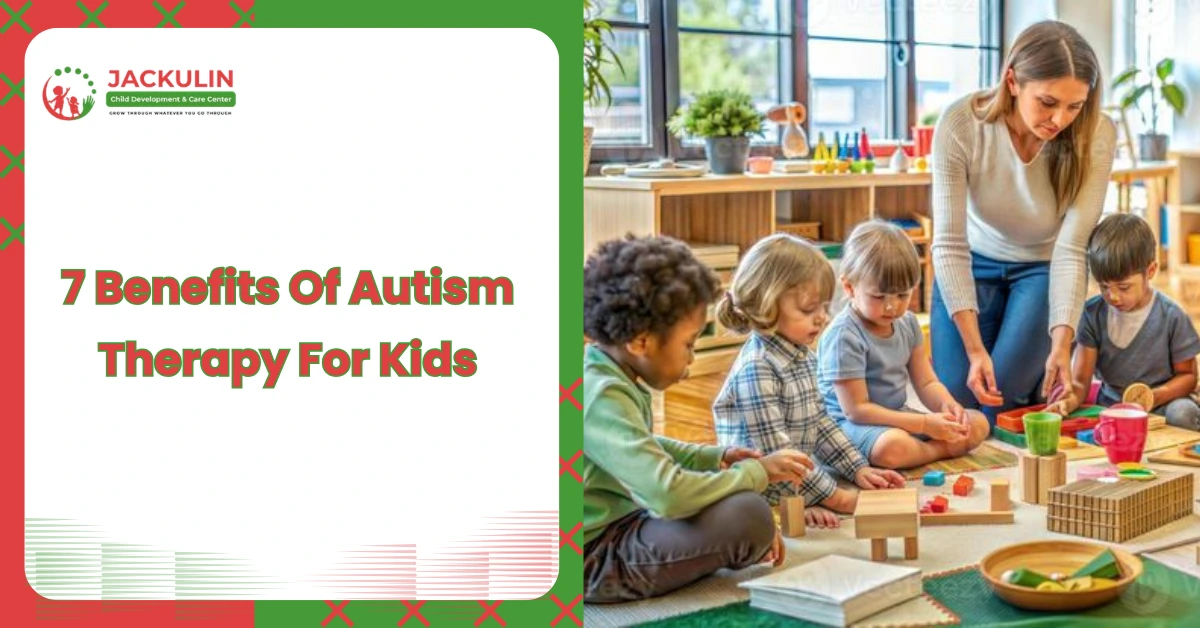
7 Benefits Of Autism Therapy For Kids
𝗧𝗮𝗯𝗹𝗲 𝗼𝗳 𝗖𝗼𝗻𝘁𝗲𝗻𝘁𝘀
– Introduction
– What Is Autism Therapy For Kids
– 7 Benefits Of Autism Therapy For Kids
– Common Signs That Children Need Support
– How Professional Therapy Helps
– Conclusion
– FAQs
7 Benefits Of Autism Therapy For Kids
𝗜𝗻𝘁𝗿𝗼𝗱𝘂𝗰𝘁𝗶𝗼𝗻
Autism therapy for kids helps children develop communication skills, social interaction abilities, learning readiness, and independence. Children on the autism spectrum may experience challenges with communication, behavior, sensory processing, and social engagement. Early support can help children build important life skills and improve their quality of life.
Every child develops differently, and personalized intervention programs play an important role in supporting individual strengths and challenges. Professional therapy services focus on helping children improve confidence, communication, behavior, and daily living abilities through structured activities and evidence-based approaches.
Jackulin Child Development & Care Centre provides child-focused developmental support programs designed to help children achieve meaningful progress through individualized therapy and family guidance.
𝗪𝗵𝗮𝘁 𝗜𝘀 𝗔𝘂𝘁𝗶𝘀𝗺 𝗧𝗵𝗲𝗿𝗮𝗽𝘆 𝗙𝗼𝗿 𝗞𝗶𝗱𝘀
Autism therapy for kids includes structured intervention programs that help children improve communication, behavior, social skills, sensory processing, and learning abilities. Therapy plans are customized based on each child’s developmental needs and goals.
Important areas of support include:
– Communication development
– Social interaction skills
– Behavioral support
– Sensory regulation
– Daily living skills
Professional therapy programs help children develop greater independence and confidence in everyday activities.
𝗦𝗲𝘃𝗲𝗻 𝗕𝗲𝗻𝗲𝗳𝗶𝘁𝘀 𝗢𝗳 𝗔𝘂𝘁𝗶𝘀𝗺 𝗧𝗵𝗲𝗿𝗮𝗽𝘆 𝗙𝗼𝗿 𝗞𝗶𝗱𝘀
1. Improves Communication Skills
Children learn to express needs, thoughts, and emotions more effectively.
2. Enhances Social Interaction
Therapy helps children build relationships and engage with others confidently.
3. Supports Behavioral Development
Children learn positive behaviors and emotional regulation strategies.
4. Improves Learning Readiness
Structured activities support attention, focus, and classroom participation.
5. Develops Daily Living Skills
Children learn practical skills that improve independence.
6. Supports Sensory Processing
Therapy helps children respond appropriately to sensory experiences.
7. Builds Confidence And Independence
Children gain confidence through successful learning and developmental achievements.
𝗖𝗼𝗺𝗺𝗼𝗻 𝗦𝗶𝗴𝗻𝘀 𝗧𝗵𝗮𝘁 𝗖𝗵𝗶𝗹𝗱𝗿𝗲𝗻 𝗡𝗲𝗲𝗱 𝗦𝘂𝗽𝗽𝗼𝗿𝘁
Parents may consider professional evaluation if children experience:
– Delayed communication skills
– Limited social interaction
– Repetitive behaviors
– Difficulty adapting to changes
– Sensory sensitivities
– Challenges with daily activities
Early identification allows children to receive appropriate support and intervention.
speech therapy for kids
𝗛𝗼𝘄 𝗣𝗿𝗼𝗳𝗲𝘀𝘀𝗶𝗼𝗻𝗮𝗹 𝗧𝗵𝗲𝗿𝗮𝗽𝘆 𝗛𝗲𝗹𝗽𝘀
Professional therapy programs use evidence-based techniques to help children achieve developmental goals. Therapists work closely with families to create individualized strategies that support communication, learning, and behavior development.
Important therapy approaches include:
– Individualized intervention plans
– Parent guidance programs
– Communication skill development
– Behavioral support strategies
– Social interaction activities
Consistent support and family involvement often contribute to positive developmental outcomes.
occupational therapy for children
𝗖𝗼𝗻𝗰𝗹𝘂𝘀𝗶𝗼𝗻
Autism therapy for kids provides valuable support that helps children improve communication, social interaction, behavior, and independence. Early intervention and professional guidance can make a meaningful difference in a child’s developmental journey.
With structured therapy programs, family involvement, and personalized support, children can build important life skills and achieve their full potential.
FAQs
1. What is autism therapy for kids?
Autism therapy for kids helps children improve communication, social interaction, behavior, and daily living skills.
2. Why is early intervention important?
Early intervention helps children develop essential skills during critical stages of growth and learning.
3. What therapies are commonly used for autism support?
Speech therapy, occupational therapy, ABA therapy, and behavioral support programs are commonly used.
4. Can autism therapy improve communication skills?
Yes, therapy programs help children improve language development and communication abilities.
5. How do parents benefit from therapy programs?
Parents receive guidance and strategies to support their child's development at home.
6. Can therapy help with social interaction?
Yes, therapy activities help children improve social engagement and relationship-building skills.
7. How long does autism therapy take?
The duration varies based on individual developmental needs and therapy goals.